Before leaving your dog alone, arrange bathroom access and reliable human care, then assess how the dog feels about separation. An acceptable care schedule and comfortable alone time are separate requirements. No breed, age, camera, or crate provides a guaranteed safe absence length.
Your meeting runs late, the commute is slow, and the dog walker cannot make it. A plan that looked reasonable at breakfast now has a gap. Leaving your dog alone becomes easier to organize when the schedule includes realistic delays and someone who can actually respond.
This guide helps you build that plan in an apartment, where each bathroom trip may involve elevators and shared doors. It also explains how to observe comfort without turning an absence into a stress test, and when professional support should take priority over another training attempt.

Separate the care question from the behavior question
The care question is whether your dog has access to everything they need while you are unavailable. The behavior question is whether separation causes distress. A dog may rest quietly but still need a bathroom opportunity. Another may have excellent practical care and become frightened shortly after a particular person leaves.
Write two statements: “The care tasks are covered by…” and “We know the dog is comfortable because…” If the second answer is only “nothing is destroyed,” you have less information than you think. Quietness and an intact sofa do not establish relaxed behavior.
Calculate the whole absence
Count from leaving the apartment to returning, including errands and likely delays. Separate office days from days at home. Add commitments that are easy to forget, such as an appointment after work or waiting for transportation.
Next, place the dog’s known needs on the same schedule. Include meals when appropriate, bathroom trips, medication as prescribed, activity, rest, and company. Use our daily apartment-dog time budget to account for building transitions.
Work from this dog’s needs
Puppies, older dogs, and dogs with medical conditions may need different arrangements. Ask your veterinarian about care requirements rather than relying on an age-based holding-time formula. A dog’s ability to postpone elimination is not a complete welfare measure.
The RSPCA’s separation guidance recommends avoiding absences longer than four hours, with much shorter periods for puppies. This is organizational welfare guidance, not proof that any individual can cope for that long. A distressed dog may struggle within moments.
Choose coverage that fits your apartment and dog
A visitor can provide a bathroom trip, while a sitter may offer longer company. A trusted friend may handle familiar tasks but be uncomfortable with a strong dog in a busy lobby. Compare the actual service with the gap you need to cover.
| Option | What to confirm |
|---|---|
| Household member | Availability for named tasks, not simply being home. |
| Dog walker | Arrival window, handling, bathroom route, and cancellation backup. |
| In-home sitter | Comfort with the dog, access, instructions, and length of coverage. |
| Daycare or boarding | Individual suitability, health requirements, supervision, and transport. |
A busy group setting does not suit every dog. Ask how introductions and rest are managed, and whether an individual arrangement would be more comfortable. Do not use a service solely because it fills the calendar if the dog struggles there.
Try the handoff while you are available
Show the caregiver the route from your door to the bathroom area. Demonstrate the equipment, then watch them use it comfortably. Explain elevator procedures, where supplies are kept, and what to do if the usual route is unavailable.
Discuss how the dog responds to visitors entering when you are absent. Do not assume a person welcomed alongside you will be equally welcome entering alone. Arrange a gradual introduction and get professional advice when fear or guarding makes access unsafe.
Observe without setting a test the dog must endure
A camera can show what happens after you leave, including responses to hallway sounds or confinement. Position it to observe the dog’s usual area, with cords secured and household privacy considered. Recording should answer a practical question, not create a difficult event for the sake of footage.
Look at the transition and the pattern afterward. Does your dog move between comfortable rest positions, or repeatedly pace and watch an exit? Do they resume ordinary activity, or remain tense? Note the timing of external sounds alongside the behavior.
The ASPCA’s separation-anxiety guidance describes signs such as persistent vocalizing, pacing, drooling, and destructive escape attempts. These signs need context and assessment; illness, incomplete housetraining, and environmental triggers can produce overlapping problems.
Save a useful observation, then respond
If you notice distress, return or arrange a trusted person to help when it is safe to do so. Do not remain away waiting for an episode to become more dramatic. A short record of what preceded it can be enough to discuss with your veterinarian.
Two-way audio helps some owners communicate, but the dog may react differently to a disembodied voice. Introduce it while present and watch the response. If the voice causes searching or agitation, stop. Our indoor-camera guide explains observation, privacy, and response planning.
Build comfortable separation gradually
For a dog who is relaxed at the starting point, practice very brief separations that remain easy. The starting duration may be a moment, not several minutes. Return before signs of distress and vary practice according to the dog’s response instead of increasing every session.
RSPCA’s alone-time training guidance outlines gradual practice. The process is different from leaving a dog to “cry it out.” Repeated panic is a reason to revise the plan, not proof the dog needs a stricter lesson.
Separate training time from necessary coverage
Your work schedule does not set the dog’s learning pace. Arrange care for absences that exceed comfortable practice. For example, a sitter can cover an office day while you work on a few manageable separations during a quieter part of the week.
Keep a brief training note: the starting situation, duration, response, and whether the dog recovered easily. Do not treat one successful attempt as permission to jump to a full workday. Revisit the plan after a move, schedule change, or health change.
Know when to stop home practice
If your dog cannot tolerate even a mild separation, becomes distressed sooner, or risks injury, stop escalating exercises and seek veterinary behavior support. VCA’s veterinary guidance cautions that some dogs become sensitized rather than more comfortable when practice exceeds their ability to cope.
A veterinarian may recommend medical evaluation, individualized behavior modification, and sometimes prescription treatment. Medication is not a failure and should not be improvised from human products or another dog’s prescription. Ask how the treatment and practical care arrangements should work together.
Know what equipment cannot do
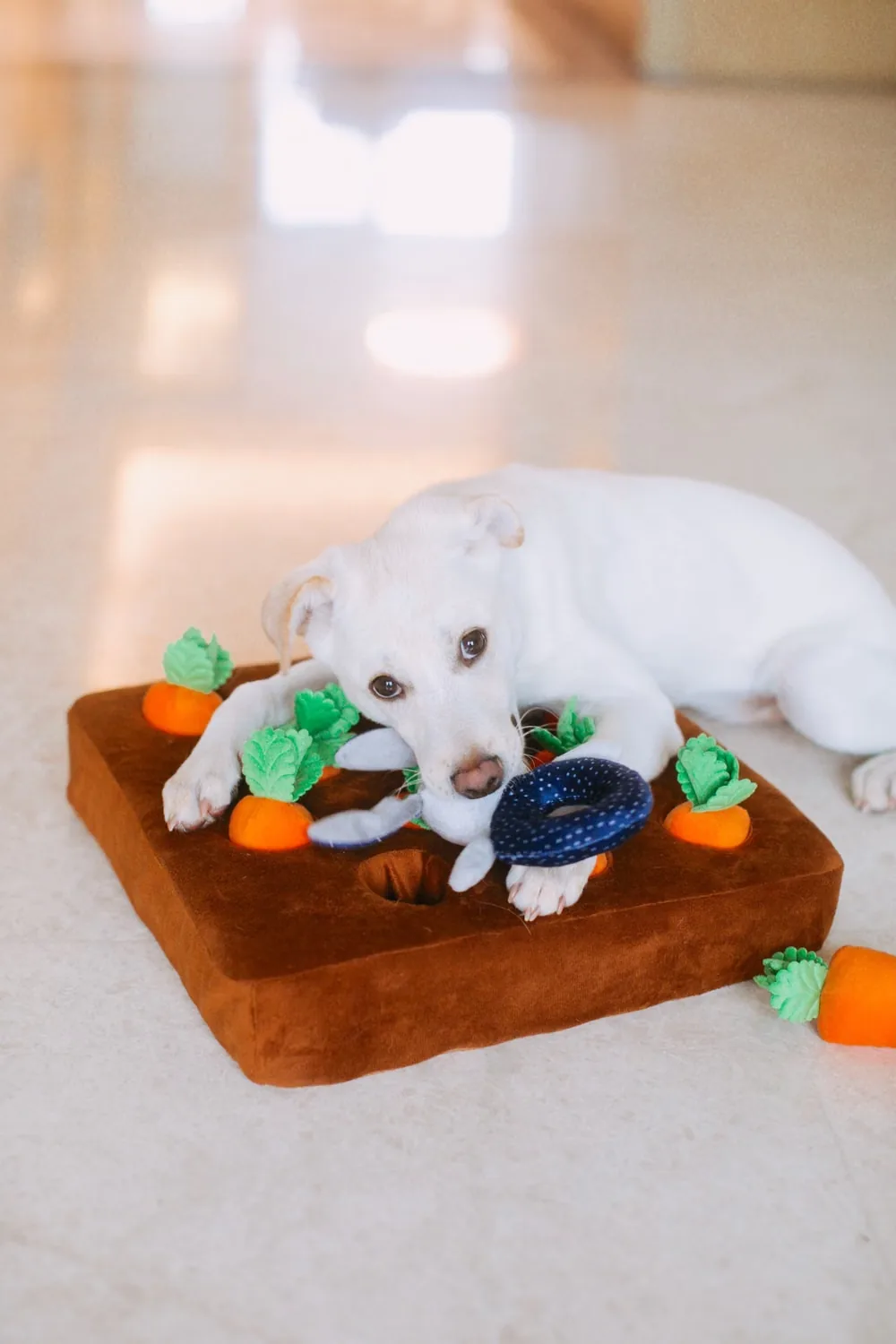
A camera cannot provide a bathroom break or open a water supply that has spilled. A food toy may offer an enjoyable activity, but it does not treat severe separation distress. A crate may be comfortable for one dog and frightening for another.
Introduce equipment while you can supervise. Check whether the dog eats, rests, and moves comfortably with the arrangement. Do not leave new items unattended simply because they are labeled durable. Ask your veterinarian about dietary restrictions, and account for food rewards within the feeding plan.

For a safe apartment setup, secure exterior doors, windows, cords, household chemicals, and reachable hazards. Keep fresh water dependable and the temperature comfortable. Choose a location the dog already accepts rather than confining them in an unfamiliar room on the first busy morning.
Make a coverage ladder
List a primary arrangement, a backup, and a contact for urgent situations. Confirm that each person agrees to the role and can access what they need. Store keys, codes, and medical instructions securely; do not put private access information in a public planning document.
Our backup-care guide helps organize the handoff. Include the dog’s routine, equipment location, veterinarian, and emergency contact. Keep medication directions exactly as prescribed, with a person to call if anything is unclear.
Plan for the canceled visit
Suppose a walker cancels while you are in transit. Who can arrive, and how will you reach them? Decide whether a household member can change their schedule or a backup sitter can cover. Verify that the backup has met the dog and understands the building.
Also plan for power or internet failure. An unavailable camera should not remove the entire response system. Ask the caregiver to report what they actually observed and confirm completion of essential tasks. Your care plan should still function without a video feed.
Three questions before extending an absence
Does another person’s company actually help?
Some dogs are comfortable with a familiar person even when you are away. Others remain distressed when a particular attachment figure leaves. Before relying on a sitter, observe a manageable handoff. Report continued pacing or exit-watching to your veterinarian rather than assuming any company solves the problem. The sitter arrangement may need adjustment alongside treatment.
Is the difficulty separation or the location?
A dog might struggle behind a closed door while someone is still home, or react to a burst of hallway activity regardless of your presence. Note those distinctions. They can help a professional investigate confinement distress, environmental triggers, and separation-related concerns. Avoid changing several barriers and departure conditions at once, because you will lose track of what altered the response.
Can the practical schedule survive a delay?
A single comfortable short absence does not answer the care question for a longer one. Check the next bathroom opportunity, the caregiver’s arrival window, and the contact who can respond if you are delayed. If extending the absence removes a necessary visit, solve that gap first. Training progress cannot substitute for care.
Keep these answers with the coverage ladder. They turn “the dog seemed fine” into a more useful decision record and show what still needs observation. Recheck them when the household changes, especially before a new job schedule or a trip. Prepare the arrangement while you have time to revise it.
Review the plan after an ordinary week
Compare scheduled visits with what actually happened. Note missed arrival windows, building delays, the dog’s recovery, and whether each caregiver could manage the route. Adjust the practical arrangements before extending absences.
If barking or accidents appear, avoid punishment on returning home. Investigate the cause with your veterinarian and, where appropriate, a qualified professional. A damaged door, repeated distress, or a sudden health change deserves attention beyond buying another toy.
A plan you can rely on when you leave
Leaving your dog alone is a responsibility to organize, not a tolerance test to pass. Combine dependable care coverage with careful observation and gradual learning where appropriate. When you know who will help, what they will do, and how your dog responds, departures become clearer decisions with fewer gaps.
Sources & further reading
Research and photo-license checks: October 13, 2026. AI-assisted editorial work by MyPupwise. Professional review remains pending; no veterinary review is claimed. The care comparison and scheduling examples are original planning tools, not diagnostic criteria. Photographs illustrate household situations and do not document separation-anxiety cases or imply endorsement.
- ASPCA: Separation Anxiety.
- RSPCA: Recognizing separation-related behavior.
- RSPCA: Training a dog to stay home alone.
- VCA: Separation Anxiety in Dogs.
Consult your veterinarian for persistent distress, sudden changes, or medical care requirements.
General guidance does not replace individual veterinary or behavior assessment.