
If your dog is foaming at the mouth, look at how they’re breathing and acting before you look at the foam. Bubbles can form when saliva mixes with air during panting or licking. But foamy drool can also accompany choking, poisoning, overheating, a seizure, or trouble swallowing.
Get emergency help now if your dog is struggling to breathe, choking, seizing, collapsing, or repeatedly trying to vomit with little or nothing coming up. Possible poisoning needs immediate professional advice, even if your dog seems fine. Keep your hands away from the mouth, don’t give home remedies, and call the veterinary team as you arrange care.
Foam on its own cannot tell you the cause. Use the signs below to decide what to do next and to give the clinic a clearer picture of what happened.
Dog Foaming at the Mouth: Quick Safety Check
Emergency — Seek Veterinary Care Now
- Breathing or swallowing: Struggling for air, blue or gray gums or tongue if visible, choking, or inability to swallow saliva. Blood or pink froth with a cough or breathing difficulty also calls for emergency care.
- Awareness or movement: A seizure, collapse, loss of consciousness, severe weakness, or sudden major changes in coordination or behavior.
- Retching or heat: Repeated dry heaves, especially with a swollen or painful belly; heavy panting and drooling that persist after heat exposure, especially with vomiting, weakness, or confusion.
- Exposure: Suspected poisoning: call an emergency veterinarian or animal poison control immediately. Go straight to emergency care if severe signs are present. For credible rabies exposure, keep your distance and call your veterinarian and local public health or animal control immediately for safe handling instructions.
Urgent — Contact a Veterinarian Promptly
Call promptly if the drooling is new and unexplained, persists, returns, or comes with mouth pain, gagging, reduced appetite, or vomiting. Report any blood you see. If breathing, swallowing, or alertness changes, go to emergency care.
Possible Temporary Trigger — Still Assess the Context
A small amount of foam may follow excitement or panting. Stop the activity and look for comfortable breathing, normal awareness, and a return to your dog’s usual behavior. Check for heat, access to hazards, and signs of discomfort. A brief episode does not rule out a problem. If unsure, call for triage.
This checklist helps you describe what you see. It cannot replace veterinary triage or an exam.

Was it drool, vomit, or a cough?
“My dog is foaming at the mouth” describes what you saw, not how the material got there. The most useful detail is often what happened a few seconds earlier. Did saliva collect on the lips, did the belly heave, or did your dog cough first?
- Drool or foamy saliva: Liquid or bubbles gather on the lips, chin, or floor while your dog pants, licks, or swallows. This can happen when the mouth makes more saliva than usual or when the dog cannot clear a normal amount by swallowing.
- Vomiting: There may be lip licking, nausea, retching, and visible belly contractions before material comes up. Vomit can contain fluid or froth even when you see no food. A puddle of white foam alone does not identify the source.
- Regurgitation: Water, food, or saliva comes back up with little effort, often soon after eating or drinking. Tell the clinic if there was no belly heaving. Don’t offer a test meal or drink to try to reproduce it.
- Coughing with froth: A bout of hacking may end in a gag and a small amount of froth. A cough can look like retching, so describe the sound and the sequence. If your dog is working hard to breathe, go now rather than trying to classify it.
You don’t have to choose the right medical term. “She coughed three times, gagged, and left a little white froth” gives the team more to work with than a guess about what the foam contains.
Does white, yellow, or pink foam mean anything?
White bubbles may be saliva, mucus, or foamy vomit. Yellow fluid can include bile if it came up with vomiting, but it does not prove an empty stomach or gastritis. Pink or red material may contain blood. Call for advice promptly, and seek emergency care for ongoing bleeding, a significant amount of blood, or blood with breathing trouble, weakness, or repeated vomiting.
Thickness is also unreliable. Thick strings of saliva do not establish dehydration or kidney disease. Report the color and amount, but make care decisions based on the dog’s condition and possible exposures.
What to do for a dog foaming at the mouth
1. Check breathing and awareness from a safe distance
Is your dog responding to you? Can they breathe without obvious effort? Look for a stretched neck, pronounced belly movement with each breath, or noisy breathing that is unusual for your dog. If they are struggling, get emergency care. Do not hold their mouth shut or muzzle a dog with breathing trouble, active vomiting, or a seizure.
2. Stop the activity and prevent further exposure
Move out of heat and into a cooler area if you can do so safely. Block access to the spilled product, plant, medication, or broken toy. Keep other animals and children away. If wildlife contact makes rabies a possibility, don’t grab, restrain, or transport the dog before getting handling instructions.
3. Skip home remedies and mouth checks that require force
Do not induce vomiting or give peroxide, milk, oil, salt, activated charcoal, or human medications unless a veterinary professional specifically directs you. Do not force food or water. Never reach into the throat or pull on string you can see in the mouth. You can get bitten or make an injury worse.
4. Call the right service for the situation
For emergency signs, head to an emergency veterinary hospital and have someone call ahead if possible. Don’t wait for a callback while your dog is struggling to breathe or repeatedly trying to vomit. For possible poisoning, call your veterinarian or ASPCA Poison Control at (888) 426-4435 in the United States. A consultation fee may apply. A well-looking dog can still need time-sensitive treatment.
5. Share the timeline, not a theory
Tell the clinic when it started, how long it lasted, what happened first, and whether your dog is back to baseline. Mention recent food, walks, chews, medications, wildlife contact, and anything missing or spilled. Give your dog’s approximate weight and relevant medical history. If safe, photograph a product label or record a short video, but never delay care to collect evidence.

What might be behind foamy saliva?
Veterinarians often start with two questions: Is something triggering more saliva, or is something preventing normal swallowing? Several causes can look alike. The timing and other symptoms are what help narrow the possibilities.
Nausea, motion sickness, and digestive problems
Dogs may lick their lips, swallow repeatedly, or drool before vomiting. If this happens during car rides, motion sickness is one possibility. When it happens at home, digestive irritation, a swallowed object, or other illness may also be involved. A pattern can guide the exam, but it does not establish a diagnosis.
Repeated attempts to vomit with little or nothing coming up are a separate concern. A dog with gastric dilatation-volvulus, or GDV, may pace, drool, retch, and develop a distended belly as the stomach expands and twists. You may see only a little saliva or froth. Go to an emergency vet immediately; don’t wait for obvious swelling or assume the dog just needs to vomit.
Poisoning and exposure to an irritant
Cleaning products, pesticides, certain foods, and human medications can cause drooling. Some irritate the mouth; others cause nausea or affect the nervous system. Foaming is not a way for the body to clear a poison, and the amount of saliva does not reveal the dose. Some dangerous exposures cause no early signs at all.
A chewed bottle, open bag, spilled cleaner, or missing pill is enough reason to call. If you can do so safely, note the product name, active ingredients, strength, how much might be missing, and when it happened. Our dog food poisoning guide explains common household food risks. If the likely exposure is chocolate, see what to do after a dog eats chocolate for the details the clinic will ask for. Make the call first.
A sore mouth, dental disease, or something stuck
Inflamed gums, a broken tooth, a cut, or debris wedged near the teeth can make chewing and swallowing painful. Look for changes you can observe without opening the mouth: dropping kibble, chewing on one side, pawing at the face, bad breath, or avoiding a toy your dog normally likes. Dental pain can be present even when a dog still eats.
A bone fragment or chew can lodge farther down in the esophagus, the tube carrying food to the stomach. A dog may gag, repeatedly try to swallow, or bring water back up. A dog that is still breathing can have a serious obstruction. Get immediate veterinary guidance after suspected lodging or severe swallowing difficulty. For routine prevention after the episode is assessed, see our guide to tartar and dental care.
Excitement, fear, panting, and heat
Excitement or fear can change how much a dog drools, and rapid airflow over wet lips can whip saliva into bubbles. Timing can help: a little foam just as a dog starts playing or hears a loud sound is different from drooling that begins at rest and keeps going. Our fireworks anxiety guide describes other signs of fear, such as hiding and pacing. A familiar trigger does not explain new signs on its own.
After exercise, stop and assess the recovery. On a warm or humid day, heavy panting with persistent drooling, vomiting, weakness, confusion, or collapse can indicate heatstroke. Move your dog into a cooler area and seek emergency care immediately; ask the clinic for cooling instructions while arranging transport. Flat-faced dogs can struggle sooner. Plan ordinary outings using our hot-weather walking guide and guide to exercise by age and lifestyle.

Seizures and other neurologic problems
During some seizures, a dog falls, stiffens, paddles, or loses awareness while saliva collects around the mouth. Other seizures can be less obvious. Repeated jaw movements or facial twitching with altered awareness are details to report. Shaking alone does not tell you whether the cause is a seizure, toxin, pain, or something else.
Call emergency veterinary care immediately for a dog who is foaming and seizing or shaking uncontrollably. If it is safe, move nearby objects and keep the dog away from stairs without restraining them. Time the event and keep hands and objects out of the mouth. Tell the team if the episode is approaching five minutes, another starts, or your dog does not recover normally. Don’t wait to reach five minutes before calling.
Rabies: take the exposure seriously, not the foam alone
Foamy saliva by itself neither confirms nor rules out rabies. Rabies affects the nervous system and can cause swallowing difficulty, weakness, paralysis, or changes in behavior. A dog does not have to be aggressive. Recent contact with a bat or other potentially infected mammal is more useful to report than the appearance of the drool.
If there is a credible exposure, keep people and pets away without attempting risky handling. Avoid saliva contact. Call your veterinarian and local public health department or animal control immediately, and mention the dog’s vaccination history. Follow their instructions before moving the dog or arriving at a clinic. Vaccination lowers the risk but does not remove the need to report a credible exposure.
If someone was bitten or potentially exposed to infected saliva through broken skin, the eyes, or the mouth, get medical and public health advice immediately. Wash bite wounds promptly with soap and running water. Do not wait for symptoms in the person or dog. See our U.S. dog vaccination guide for routine prevention and recordkeeping.
Other causes a veterinarian may investigate
Swelling beneath the jaw or tongue may point toward a salivary gland problem, among other possibilities. Disease elsewhere in the body, including some kidney or liver disorders, can also contribute to drooling. The foam cannot distinguish these problems. Report changes in eating, drinking, weight, or energy that preceded it, even if they seemed unrelated at the time.
What happens at the veterinary clinic?
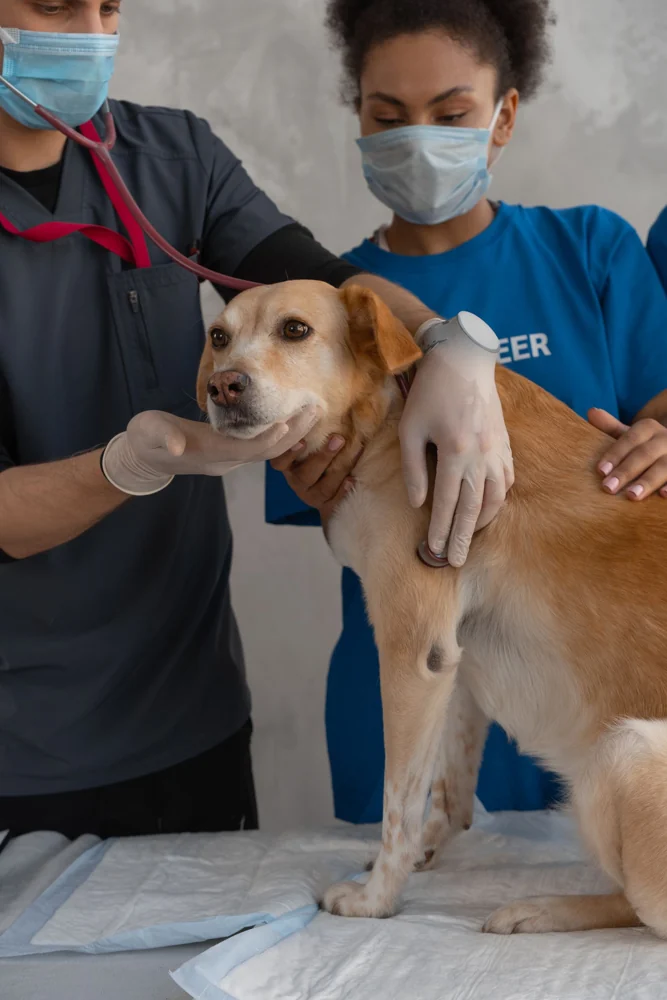
The team checks the most urgent risks first, including airway, breathing, circulation, temperature, and awareness. If those are stable, the veterinarian may examine the mouth, teeth, and throat and assess the abdomen or nervous system. An exam under sedation is sometimes useful if pain or an object makes a safe look impossible, but it is not needed for every dog.
What comes next depends on the findings. A dog that may have swallowed a chew might need imaging to locate it. A dog that drools and seems weak might need blood tests to check blood sugar, organ function, or other clues. Suspected poisoning calls for an assessment based on the substance and timing. The veterinary team may treat immediate problems before they can establish a cause.
Before leaving, ask what changes mean you should come back, whether to offer food and water, and who to call if the episode repeats overnight. If no cause is clear at the first visit, ask what to record. A written timeline can help connect episodes that occur days apart.
Make the next incident less likely
You can reduce some common risks without knowing every cause of drooling. Start where your dog can reach: medication in a purse, sugar-free gum on a nightstand, a snack bag in an open trash can, or chemicals on a garage floor. Our list of foods dogs should avoid can help everyone in the household recognize less obvious hazards.
Choose toys and chews sized for your dog and supervise their use. Take away toys as pieces break off. Keep preventive dental visits and ask about brushing when the mouth is healthy and comfortable. Keep vaccination records easy to find and avoid letting your dog investigate unfamiliar wildlife.
For exercise, plan for shade, water breaks, and an easy return route. On hot days, change the time or length of the outing. Save your regular clinic, nearest emergency hospital, and animal poison control numbers now so you don’t have to look them up during a crisis.
Frequently asked questions about a dog foaming at the mouth
Why is my dog foaming at the mouth but acting normal?
Brief foamy saliva can follow excitement, panting, or a bitter taste. However, normal behavior right now does not exclude poisoning, mouth pain, or a swallowed object. Call immediately if there could have been a hazardous exposure, and call promptly if the episode is unexplained or returns.
Does foaming at the mouth always mean rabies?
No. Many unrelated problems can cause foam, and an infected dog may show other signs instead. Call your veterinarian and local authorities immediately if your dog had possible contact with a rabid animal, whether you see foam or not.
What causes white foam around a dog’s lips?
Air can form white bubbles in saliva, especially during panting. But material from vomiting or coughing can also be white. The movements you saw before the foam, along with breathing and behavior, are better clues than color.
Can anxiety or exercise cause foaming?
Yes, either can contribute to panting and foamy saliva. Stop the activity and pay attention to recovery. Persistent heavy panting, weakness, or confusion after heat exposure needs emergency care. Repeated episodes in cool conditions still deserve a veterinary call.
Can bad teeth cause foamy saliva?
Yes. Gum inflammation, dental pain, or a broken tooth can increase drooling or make swallowing uncomfortable. Have the mouth checked, particularly if the dog drops food, has facial swelling, or shows a change in chewing.
What if my dog is foaming and shaking?
Call an emergency vet now, particularly if the shaking is sudden, uncontrollable, or paired with confusion, weakness, or possible toxin exposure. Clear nearby hazards if safe and keep away from the mouth. Describe whether the dog responds to your voice.
Is vomiting white foam different from drooling?
Yes. Vomiting involves bringing up stomach contents, often after belly heaving. Drool gathers in or spills from the mouth. Repeated attempts to vomit with little output can signal bloat even if a small amount of foam comes up.
Can a dog be poisoned without foaming?
Yes. Some toxins cause delayed signs or none at first. Call a veterinary professional or poison control as soon as you suspect an exposure. Have the packaging handy if available, and do not give anything by mouth unless directed.
This guide provides general information for dog owners. A veterinary professional should assess your dog’s individual signs and exposure risks.
General guidance does not replace individual veterinary or behavior assessment.