
Ranges describe the registry profile, not a measurement, life expectancy, or health prediction for a particular dog. Separate sex or variety ranges are preserved where the source supplies them.
Source characteristics at a glance
The registry uses an ordinal 1–5 scale. A higher number indicates more of the named trait, not a better dog or a compatibility score. These descriptions are general and are not clinical measurements.
History and original work
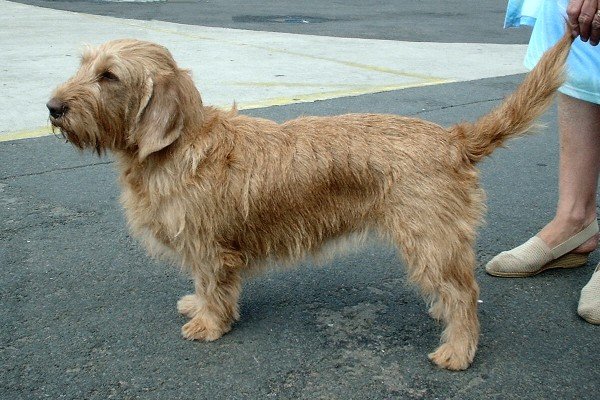
The Basset Fauve de Bretagne is a small rough-coated scent hound from Brittany, France, related to the larger fawn hounds of the region. A lower-built hunting companion suited people following on foot through cover. Details of the exact crosses remain debated; short legs do not mean that its hunting persistence or activity needs are similarly reduced.
Temperament and training
Teach a response to its name and a turn toward you before following a strong trail. Another chance to sniff can reward cooperation. Keep lessons varied and avoid escalating corrections when the nose becomes more interesting than a repeated cue. Supervise around smaller pets, and teach children to invite interaction rather than pulling the dog away from an interesting find.
Daily needs & enrichment
Lay a simple trail in secure ground or hide a scented toy, then let the hound work at its own pace on a suitable line. Walks with time to investigate provide a different experience from a fast march. Check boundaries before enclosed play and give searches a clear ending. The useful goal is an engaged, responsive hound, not a dog too tired to notice a scent.
Coat care
The coarse, wiry coat needs a comb through loose hair and debris followed by suitable brushing. Some coats need hand-stripping by someone familiar with the breed rather than indiscriminate clipping. Check ears, paws, and the underside after pushing through cover. A relatively weather-resistant coat still needs inspection for irritation and trapped plant material, especially during seasonal shedding.
Comb weekly with a fine-toothed comb followed by a suitable stiff brush, using gentle pressure. Arrange knowledgeable hand-stripping where the coat calls for it. Bathe for actual dirt, rinse fully, and dry comfortably; avoid forceful stripping and indiscriminate clipping.
Living Environment & Daily Needs
Make secure scent exploration part of a Basset Fauve de Bretagne's daily routine. Its short legs do not remove an energetic hunter's need for activity; plan bathroom access, rest, and shared learning around the actual dog.
Care through life stages
Puppies need gentle ear and foot handling and secure scent games. Condition adult walks and searches progressively with recovery. Seniors may need easier access and shorter routes; eye pain, visual changes, or persistent lameness warrants assessment.
Frequently asked questions
Does a clear open-angle glaucoma DNA result rule out every glaucoma? No. It addresses a particular inherited form. Discuss clinical eye assessment and any drainage-angle examination with an ophthalmologist, and seek urgent help for sudden eye pain or visual change.
Questions to ask before choosing a dog
What does this hound do when an interesting trail crosses a doorway or a familiar walk? Request the named glaucoma result and explain with the breeder or veterinarian what the eye examinations covered. Ask about kneecap and cardiac records and family seizure history. Find out how the actual coat is maintained and how the household will provide secure scent work.
Plan care for the individual dog
Budget, time alone and household compatibility depend on the individual dog and your circumstances. Use our care budget guide, time-alone planning guide and questions before adopting alongside the breed-specific source information above.
Health questions for a veterinarian
Primary open-angle glaucoma has a documented genetic association in this breed, and a breed-appropriate DNA test is available. It concerns one form of impaired eye-fluid drainage; a clear result does not exclude closed-angle glaucoma or every cause of blindness. Ask an ophthalmologist whether additional assessment of the drainage angle is appropriate, as routine eye screening and gonioscopy are different examinations. The registry also lists patellar, cardiac, and eye evaluations and discusses other health concerns without establishing frequencies. Sudden eye pain, redness, squinting, or visual change needs urgent veterinary care. Ask about seizures and joint or heart illness in relatives rather than accepting an unspecified DNA panel as a complete account of health.
Updated October 25, 2026. General information; see our Editorial Policy for sourcing and review practices.