
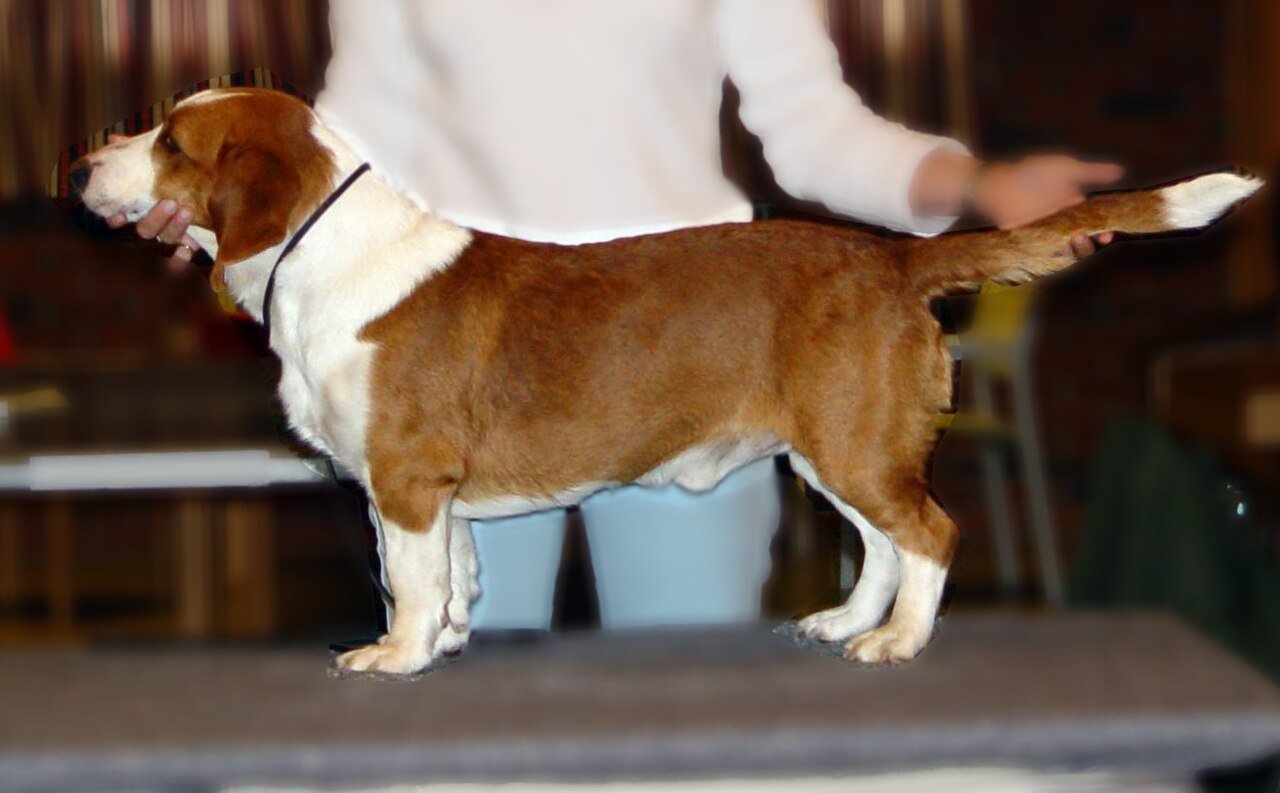
Ranges describe the registry profile, not a measurement, life expectancy, or health prediction for a particular dog. Separate sex or variety ranges are preserved where the source supplies them.
Source characteristics at a glance
The registry uses an ordinal 1–5 scale. A higher number indicates more of the named trait, not a better dog or a compatibility score. These descriptions are general and are not clinical measurements.
History and original work
The Drever developed in Sweden from Westphalian Dachsbracke stock imported from Germany and selected for local hunting conditions. Its short-legged build suited steady trailing of game rather than high-speed coursing. The Swedish type received its own name in the twentieth century and remains closely connected with scent-hunting work.
Training & behavior
Make returning to you part of the scent game: reward a check-in and sometimes release the dog to sniff again. Practice recall in secure surroundings and use a leash when boundaries are absent. Reward quiet pauses after vocal excitement. Persistence on a trail is a working quality to manage, not a reason to use increasingly harsh corrections.
Daily needs & enrichment
Provide varied sniffing walks, short laid trails, and hidden-object searches. Increase duration with fitness while matching pace to a short-legged dog rather than a bicycle. Inspect fencing for gaps and digging opportunities. Teach a clear finish to work and allow relaxed company afterward, without expecting a simple coat to mean minimal engagement.
Coat care
Use a soft-bristle brush or rubber mitt to remove loose hair from the short, coarse coat. Check the chest, low underside, feet, and ear flaps for debris after trailing. A quick wipe can remove ordinary surface mud; clipping and stripping are not routine needs.
Bathe when genuinely dirty, rinse dog shampoo completely, and towel-dry the belly and skin beneath the ears. Allow remaining dampness to dry comfortably before cold outings. Avoid sharp deshedding tools on thinly covered areas or frequent scented washes for persistent odor. Pain, discharge, or repeated head shaking needs an ear examination rather than stronger home cleaning.
Living Environment & Daily Needs
Plan stimulating sniffing outings and patient lessons for a Drever, despite its short legs and simple coat. Assess the individual's carrying voice near household and neighboring activity, and keep exploration securely managed.
Practical question
Can a determined trail follower safely be exercised beside a bicycle by default?
No. Condition and pace must suit the individual, with control of sudden scent-driven direction changes; walking and structured tracking are safer starting points.
Plan care for the individual dog
Budget, time alone and household compatibility depend on the individual dog and your circumstances. Use our care budget guide, time-alone planning guide and questions before adopting alongside the breed-specific source information above.
Health questions for a veterinarian
Published evidence does not support a precise universal disease list or screening panel for every Drever. Request documented parental results and health in older working relatives, including mobility and recovery, and let a veterinarian direct further tests. Its low body and outdoor work make changes in gait, back comfort, and paw condition worth noticing without assuming a particular inherited diagnosis. Sudden weakness, inability to walk, or persistent lameness needs prompt care. Apparent endurance cannot replace a health examination.
Editorial update: October 24, 2026. General information; individual care requires veterinary assessment. No veterinary review is claimed. See our Editorial Policy for sourcing and review practices.