
Ranges describe the registry profile, not a measurement, life expectancy, or health prediction for a particular dog. Separate sex or variety ranges are preserved where the source supplies them.
Source characteristics at a glance
The registry uses an ordinal 1–5 scale. A higher number indicates more of the named trait, not a better dog or a compatibility score. These descriptions are general and are not clinical measurements.
History and original work
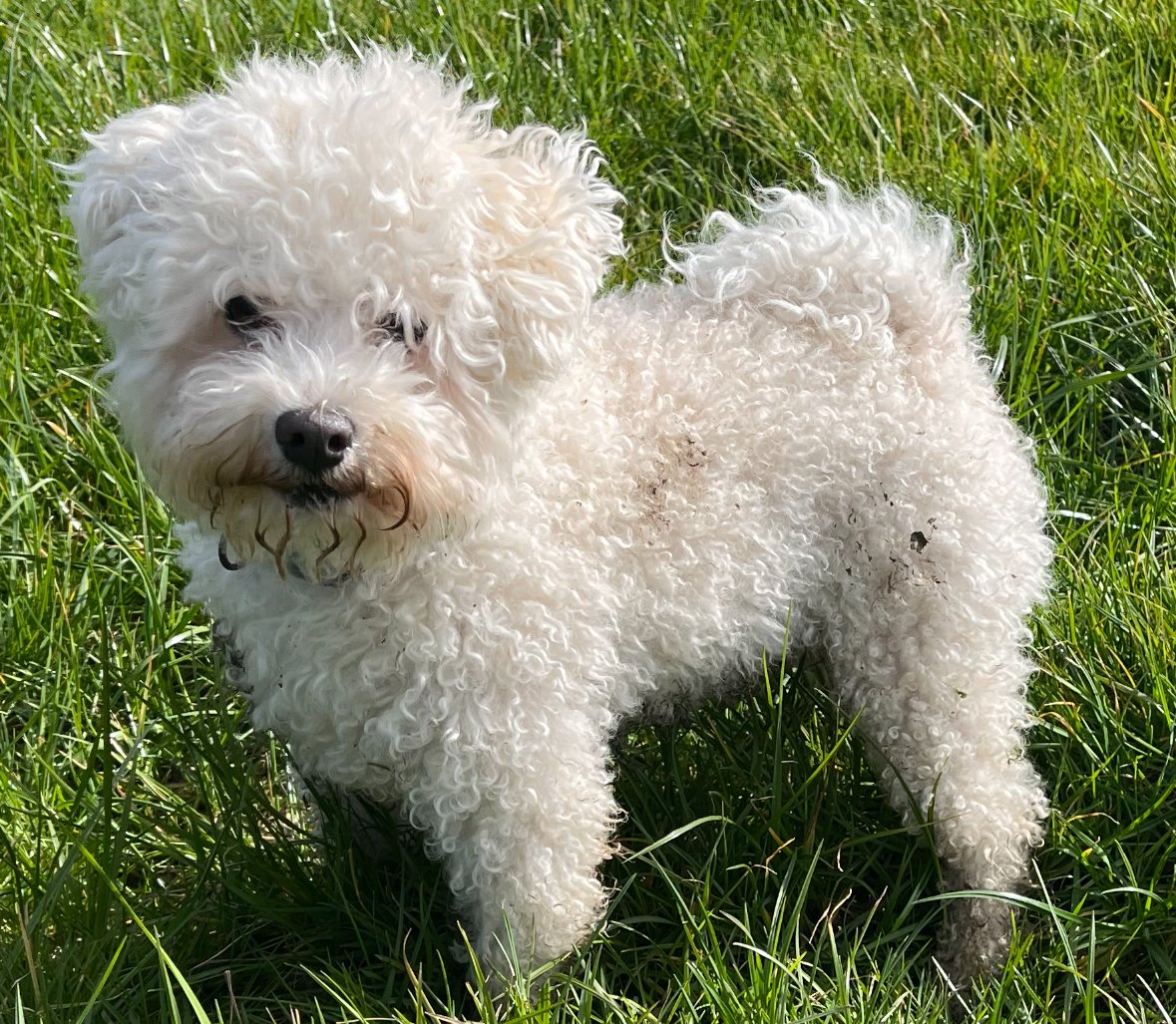
Named for Bologna in Italy, the Bolognese developed as a small companion dog and became associated with wealthy European households during the Renaissance. Its natural white coat forms loose, fluffy locks rather than the sculpted curls of a Bichon Frise. The historical companion role helps explain why everyday contact with people is a substantial part of its care.
Training & behavior
Teach bathroom habits with frequent opportunities after sleep, meals, and play, rewarding the correct place promptly. For time alone, start with the dog resting while you move a few steps away and return before distress begins. Small, gradual successes are more useful than forcing a long absence. Practice gentle foot, mouth, and coat handling with rewards so routine care does not become a struggle.
Daily needs & enrichment
Offer comfortable walks, short games of retrieving or finding a hidden toy, and opportunities to investigate safe outdoor spaces. Keep play on a surface with traction and prevent repeated jumps from high furniture. A Bolognese can be a lively participant without needing strenuous endurance exercise. Make the activity easy enough that an older dog or puppy can join without being pulled along.
Coat care
The soft, cottony coat needs regular combing in small sections, often daily when kept long. Use a pin brush and a metal comb to check behind the ears, under the legs, and where the collar rubs. Work gently from the ends of a tangle toward the roots while supporting the hair. Preserve the natural loose locks rather than assuming the coat should be brushed into a permanently sculpted puff.
Bathe when soiled, rinse out dog shampoo completely, and squeeze water from the coat with towels. Dry the roots gently, separating damp sections so moisture is not trapped beneath felted hair. A shorter pet coat can make upkeep easier, while careful eye and sanitary tidying prevents hair from obstructing daily comfort. Do not cut close to an eye or use scissors under a mat against the skin. Low shedding does not mean no grooming or guaranteed allergy safety.
Living Environment & Daily Needs
A Bolognese may enjoy quieter companionship, but still needs gentle activity and learning. Plan predictable bathroom access and a resting spot near familiar routines, alongside regular attention to the fluffy coat.
Practical question
Can a Bolognese be kept in a shorter pet coat?
Yes, a manageable trim is an option for a companion. Keep the dog comfortable and maintain combing at friction points; a short haircut does not remove the need for skin, eye, and dental care.
Plan care for the individual dog
Budget, time alone and household compatibility depend on the individual dog and your circumstances. Use our care budget guide, time-alone planning guide and questions before adopting alongside the breed-specific source information above.
Health questions for a veterinarian
A veterinary patellar examination checks for unstable kneecaps, while an ophthalmologist examines the eyes for conditions that a caregiver may not notice early. The American club's September 2025 statement also identifies a specific prcd-PRA DNA test; it does not replace the eye examination or exclude every retinal disease. Dental care deserves attention in a small companion dog: use dog toothpaste and arrange examinations rather than accepting painful teeth as an inevitable consequence of age. Investigate persistent skipping, squinting, or difficulty eating promptly.
Editorial update: October 24, 2026. General information; individual care requires veterinary assessment. No veterinary review is claimed. See our Editorial Policy for sourcing and review practices.