Dog elevator training starts before you reach the elevator. Teach comfortable waiting and movement cues in an easier place, keep the leash clear of closing doors, and choose rides your dog can handle. A frightened dog needs gradual support, not pressure to enter a crowded car.
The doors open, somebody steps out with groceries, and another dog appears behind them. A routine trip can become complicated in seconds. Good elevator manners are less about a perfect sit than about making space, moving together, and noticing when the next ride is the better choice.
Elevators combine movement, unfamiliar sounds, close quarters, and people who may not want to interact with a dog. That makes them a poor place to introduce a difficult new skill. Use this guide to build a practical sequence for your building, then adapt it for your dog’s comfort, your handling needs, and other passengers.

Prepare before leaving home
Attach the leash securely inside your home before opening the door. Check that the harness or collar fits appropriately and the equipment is in good condition. Keep your phone and keys arranged so you can manage the dog without juggling several loose objects. The goal is to reduce avoidable distractions during boarding.
Use a leash you can control without allowing a long loose section to reach a doorway. A retractable line can be difficult to manage in a confined entrance; follow your equipment’s instructions and choose a setup appropriate to the space. Never depend on an elevator sensor to detect a thin leash or a small animal.
Keep dog and handler on the same side of the doors
Watch both the dog and the line during entry and exit. Do not allow the dog to board while you remain outside, or step out while the dog stays behind. Even a quiet dog can hesitate when the floor changes. Move as a coordinated pair with enough attention to notice a pause.
Ask building management about door timing and accessible operating features. Learn the actual controls before you need extra time. Do not improvise by putting a leash, limb, or object between closing doors. If a door or elevator seems faulty, use the building’s reporting process and an appropriate alternative route.
Choose a waiting place with an exit option
Stand far enough from the entrance to allow passengers to leave. A spot beside the doorway is often easier to manage than standing directly in front of it, but layouts differ. Avoid blocking emergency access or a mobility aid’s route. Keep enough room to move away if the arriving car is unsuitable.
Look at the space before calling the elevator. Is another dog waiting? Are children running toward the doors? Is a delivery cart about to pass? You can change position, create distance, or wait. These decisions are part of training management, not a failure to make your dog behave on command.
Decide when to skip a ride
Skip a car when the available space would force your dog into an uncomfortable encounter. A crowded ride, a worried dog already inside, or a passenger who needs unobstructed room can justify waiting. You do not need to explain your dog’s entire history: “We’ll take the next one” is usually enough.
If busy rides are unavoidable in your building, seek help developing a workable routine before the situation becomes a daily struggle. Quieter departure times can support practice, but they may not solve the long-term access problem. A plan needs to work for necessary bathroom trips as well as optional training sessions.
Teach the pieces away from the elevator
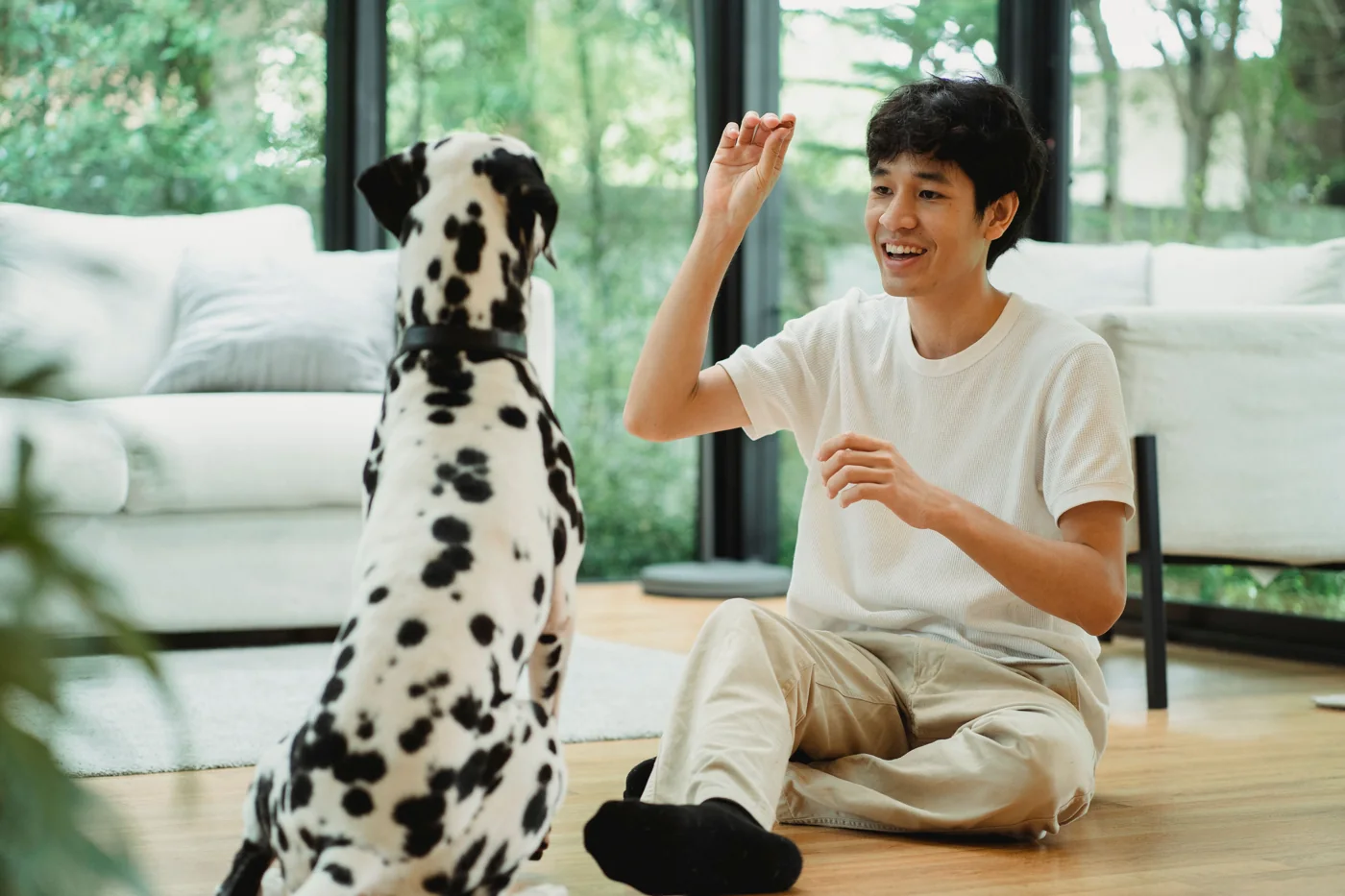
Start in a familiar room with good footing and few distractions. Practice responding to the dog’s name, moving beside you for a few steps, and pausing comfortably. Reward cooperative behavior. A standing pause can be useful; a sit is optional if sitting is uncomfortable or awkward for the individual dog.
The American Veterinary Society of Animal Behavior recommends reward-based methods. For this routine, that means making manageable requests and rewarding success rather than using leash corrections or forcing a worried dog into position. A dog who cannot respond in the lobby may need an easier setting, more distance, or a different plan.
Practice an ordinary doorway first
Use a familiar open doorway to rehearse moving through together. Ask for a brief pause on the approach, give your movement cue, and reward after crossing when both of you have room. Keep the sequence short. The practice teaches coordination without adding a moving floor, a crowd, and automatic doors at once.
Do not turn the threshold into a contest about who goes first. What matters is that the dog can move with you without surging away or becoming trapped on the opposite side. Rehearse changes of direction too, so turning away from an unsuitable ride is a familiar action rather than an abrupt tug.
Add one difficulty at a time
Once the sequence is comfortable, practice in a quiet hallway where permitted. Later, work at a distance from the elevator. Short, easy repetitions can reveal which part needs attention. Keep the movement cue consistent across household members; different words and contradictory leash handling make the sequence harder to understand.
A dog taking food is not automatically relaxed, and refusing it does not identify a specific diagnosis. Look at the whole response: body movement, willingness to approach, ability to turn away, and recovery afterward. If the dog repeatedly freezes, tries to escape, or struggles to recover, get individualized professional guidance.
Build a simple boarding and riding routine
- Wait where exiting passengers have room.
- Check the car and decide whether boarding is appropriate.
- Move through together, keeping the dog and leash clear of the doors.
- Choose a position that protects space without blocking controls or access.
- Watch the dog and doorway as the ride ends.
- Exit together and reward when you reach a safe open area.
Before pressing a floor button, know where your dog is. Avoid allowing the leash to wrap around a cart, another passenger, or your legs. If your dog changes position, adjust calmly while keeping a secure hold. Treat delivery is useful only when it does not distract you from a closing door or interfere with other dogs.
Consider rewarding after boarding and again after exiting when the space allows. Keep food close enough that another passenger’s dog cannot reach it. In a tight car with multiple animals, handing out food may create a new problem. Management and safe spacing take priority over completing a planned reinforcement sequence.
When your dog is afraid of the elevator
Identify the earliest difficult point. Is it the lobby noise, the doors opening, approaching the threshold, or the movement once inside? Write down what you can observe without provoking a demonstration. “Stopped several feet from the opening” gives a trainer more useful information than “hates elevators.”
Do not repeatedly pull the dog inside to show that nothing bad happens. Work below the level that produces obvious distress, with the option to move away. A qualified reward-based professional can develop gradual exposure appropriate to the equipment and your access needs. Necessary travel and training practice may need separate arrangements while you work.
Check health and physical access
A new reluctance to cross a threshold may involve discomfort, footing, or another health issue. Contact your veterinarian when the change is sudden, the dog appears painful, or movement is affected. The elevator may be where you notice the difficulty without being its only cause.
Carrying is not a universal solution. Some dogs dislike lifting; others are too large for the caregiver to lift safely. Discuss handling and alternatives with an appropriate professional. If stairs are your backup, consider the dog’s mobility and your own ability rather than assuming every route is interchangeable.

Manage greetings and other dogs
Your dog does not need to meet everyone sharing the ride. Ask people to give space and discourage reaching over the dog’s head or leaning into a confined corner. “Please let him ride quietly” is a clear request. A passenger’s friendly intentions do not make an interaction comfortable for the dog.
Follow the AVMA’s emphasis on avoiding uncomfortable interactions. If the dog seems uneasy, create distance or leave the situation when you can do so safely. Do not ask a child to offer food as a way to test whether the dog will accept contact.
For another dog, ask about sharing the car before boarding. Even two sociable dogs may have little room to disengage. Avoid nose-to-nose greetings in the doorway. You can acknowledge the other owner and take a different ride. That choice respects both dogs and the people using the building.
Adapt the sequence for the household
If you use a mobility aid, carry supplies, or need extra boarding time, rehearse the actual arrangement in an easier space. Consider where the leash runs and which hand controls each task. An accessible elevator is only part of the route; the apartment door, lobby, and outdoor threshold also need attention.
Children should have adult supervision and a role matched to their abilities. Avoid making a child responsible for controlling a dog in an unpredictable elevator encounter. A sitter needs the same waiting spot, movement cues, and criteria for skipping a ride. Write these details down rather than saying “he’s usually fine.”
| Difficulty | Useful next step |
|---|---|
| Dog rushes through familiar doors | Rehearse coordinated movement at home. |
| Lobby activity overwhelms the dog | Use more distance and quieter practice conditions. |
| Boarding is easy, movement is difficult | Seek an individualized plan for the ride itself. |
| Handling several items is awkward | Change the caregiver’s setup before adding training demands. |
Keep a practical record of progress
After practice, note the condition that worked: an empty car, a quieter hour, or a comfortable pause farther from the doors. Add any difficulty and the dog’s recovery. You are measuring whether the sequence is becoming usable, not collecting a streak of flawless sits.
Coordinate elevator practice with high-rise bathroom planning so urgent trips do not become training experiments. If hallway noises are the main trigger, our hallway-barking guide addresses that separate problem. The right next step depends on where the difficulty starts.
A safer shared ride
A good elevator routine is predictable for your dog and considerate of other passengers. Prepare equipment, protect doorway space, practice the movement pieces, and choose appropriate rides. When fear or handling difficulties remain, seek help and adjust the route. Everyday success can look like a quiet standing ride and an uncomplicated exit.
Sources & further reading
Sources checked October 13, 2026. AI-assisted editorial work by MyPupwise; professional review remains pending. No veterinary review or equipment testing is claimed. Building sequences and comparison examples are original planning aids. Photographs illustrate handling and practice, not elevator incidents.
General guidance does not replace individual veterinary or behavior assessment.