For hallway barking, reduce avoidable triggers, record what happens, and teach a useful alternative while your dog is comfortable enough to learn. A dog who panics, struggles to recover, or changes behavior suddenly needs veterinary or qualified behavior support.
The footsteps start before you can see who is outside. Your dog runs to the apartment door, and a passing conversation becomes another barking episode. In a shared building, you cannot control every noise, but you can change how close your dog is to the action and what happens next.
A good plan addresses comfort as well as disruption. It separates everyday management from training and uses observations to choose the right next step. Start with the routine below rather than treating every bark as the same problem.
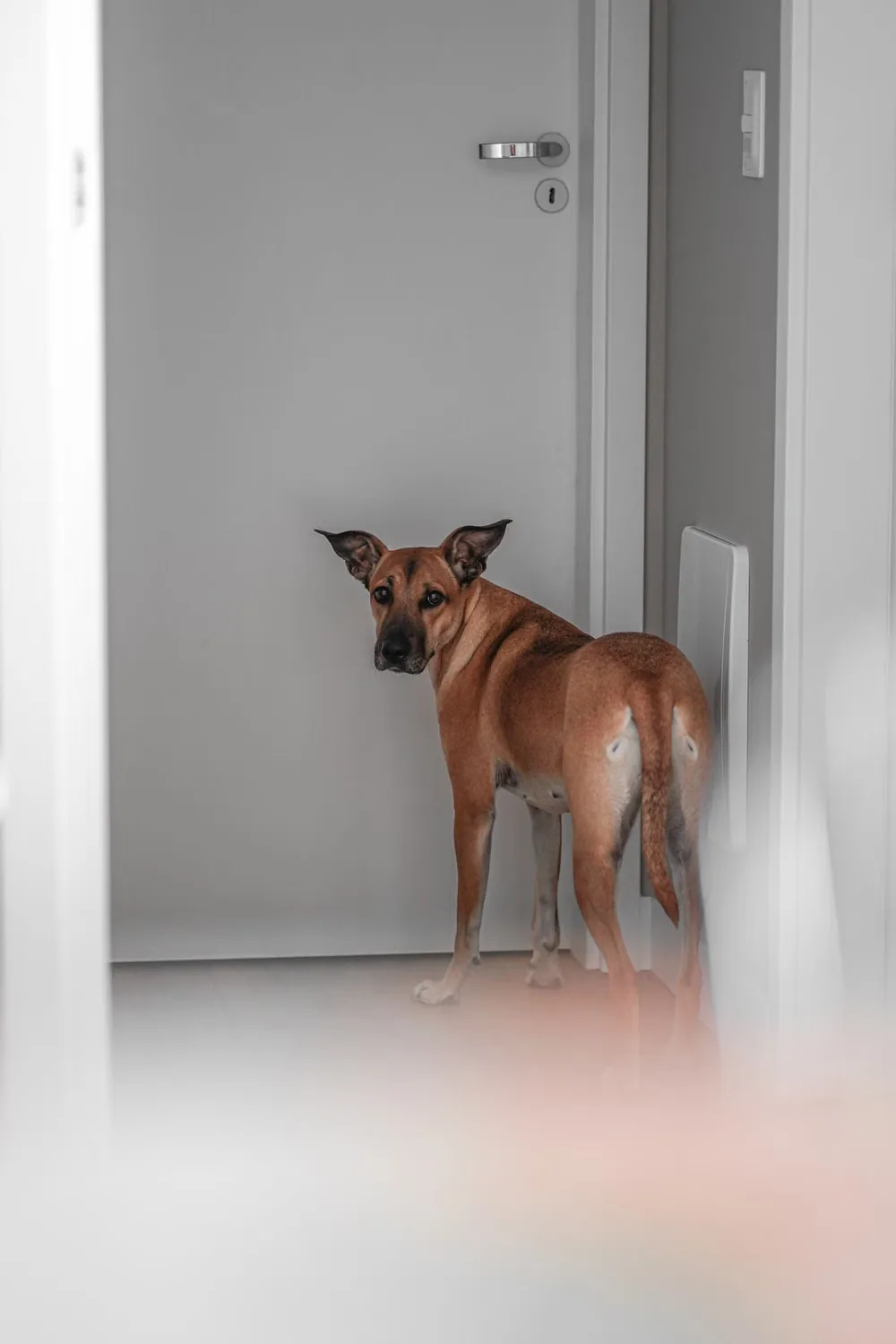
Understand what hallway barking may mean
Footsteps, keys, elevator doors, and neighboring dogs can predict different things to your dog. A sound may signal a visitor, something unfamiliar, or an opportunity to greet. Fear, excitement, frustration, and learned habits can overlap. You cannot reliably identify the cause from loudness alone.
The ASPCA’s barking overview distinguishes several patterns, including alarm, greeting, and frustration-related barking. Use those categories to ask better questions, not diagnose your dog from a checklist. Look at posture, location, timing, and recovery together.
A brief alert differs from prolonged distress
Notice whether your dog gives a few barks and returns to resting or remains tense and scans the door for a long period. A silent dog who stays rigid may still be uncomfortable. Improvement should include easier recovery and more voluntary rest, not just fewer audible barks.
Also ask whether barking occurs while you are present, only during absences, or in both situations. A hallway trigger can coexist with separation-related distress. If you are unsure, bring the observations to your veterinarian rather than assuming the problem is territorial.
Keep a short noise log
For several ordinary days, note the time, sound, your dog’s location, response, and what helped them recover. Record only what you observed. “Delivery cart passed; dog ran to door and barked” is useful. “Dog decided to protect me” adds a motive you cannot verify.
| Record | Example observation |
|---|---|
| Trigger | Keys and footsteps outside the door. |
| Starting position | Resting beside the entryway. |
| Response | Stood, barked, and remained near the door. |
| Recovery | Moved away when offered a familiar cue; resumed resting later. |
| Next adjustment | Offer a resting location farther inside the apartment. |
This example illustrates recording, not a clinical threshold. If you use audio or video, focus on your dog inside your home and respect others’ privacy. Do not set up an intense encounter just to capture evidence.
Look for one change you can test safely. If the most difficult episodes happen during the delivery rush, you might prepare the quieter room before that period. If the pattern starts after you leave, observation during a manageable absence may help a professional distinguish noise responses from other concerns.
Make the setup easier before asking for quiet
Move the preferred resting area farther from the apartment entrance if your layout permits. Keep it accessible and comfortable, with water nearby. Avoid trapping the dog behind furniture or moving them into a room they dislike. A quieter location should be a genuine option.
Reduce unnecessary visual access to busy shared spaces. Close an interior door or use a suitable barrier only if your dog is comfortable with it. Check that changes preserve ventilation and a clear exit route. Ask building staff before changing anything outside your own apartment.
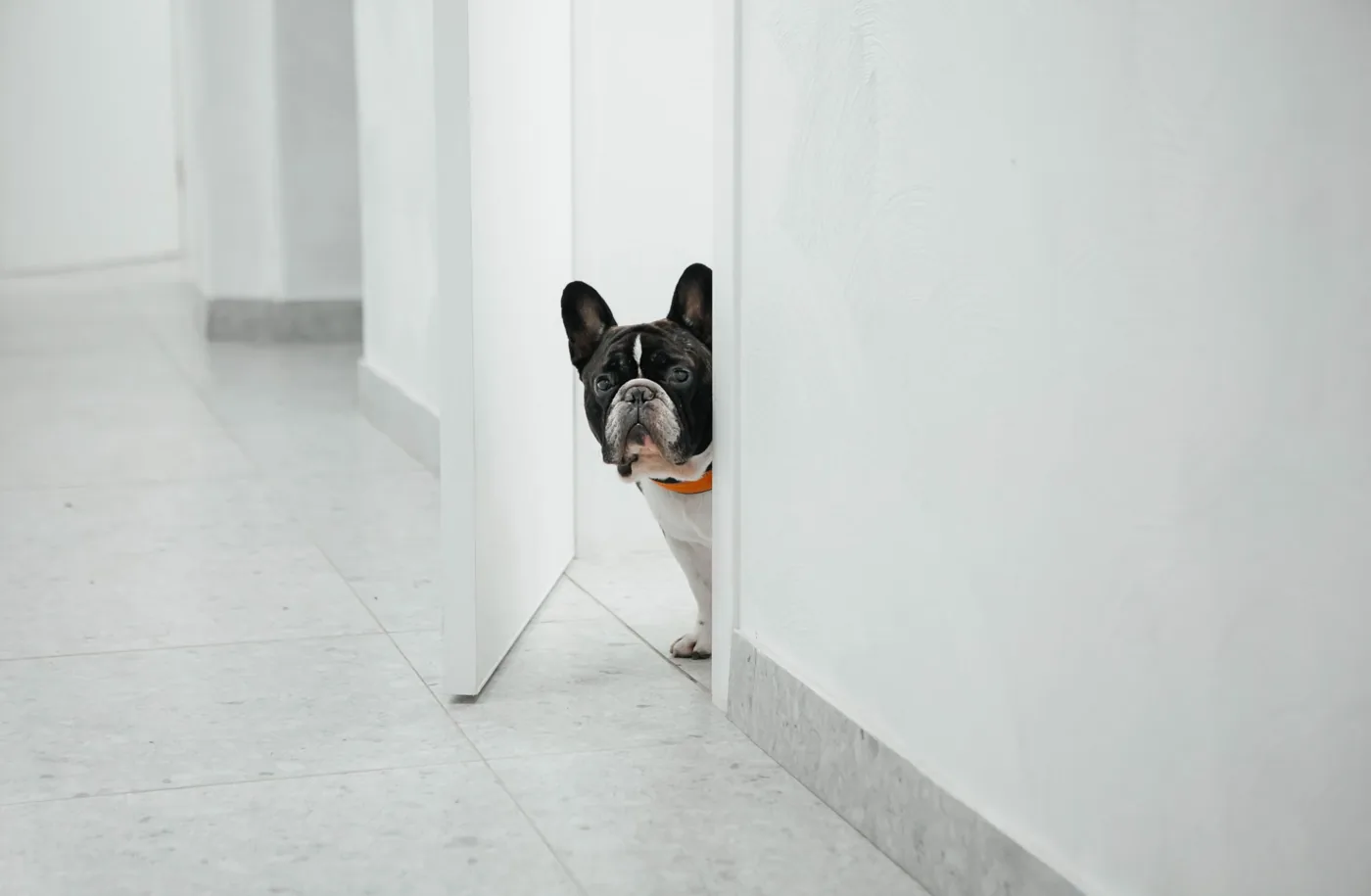
Try background sound thoughtfully
A fan or familiar sound at a modest volume may soften intermittent hallway noise. It will not soundproof your apartment. Check whether your dog rests more comfortably, and stop if the added sound makes them more alert. Never keep increasing the volume to overpower every trigger.
Management reduces the number of difficult moments while you build skills. It does not establish why barking occurs or guarantee that the dog can cope without support. Our small-home settling guide can help with choosing and introducing a rest area.
Practice below the difficult point
Begin somewhere quiet, away from the entrance. Choose a behavior that helps you create space: turning toward you, walking to a mat, or following you into another room. Reward small successes with something your dog enjoys. Keep practice short enough to remain easy.
AVSAB recommends reward-based training. Avoid shouting, leash corrections, or equipment that startles or hurts your dog. Physically holding a muzzle closed or dragging a frightened dog away is not a relaxation exercise.
Teach the alternative before adding noise
For a check-in cue, say your dog’s name once during a calm moment and reward a voluntary turn toward you. For a mat cue, reward approaching the mat, then comfortable resting when it occurs. Release the dog freely; do not demand a long stay at the outset.
Practice from different places inside the apartment while conditions remain easy. The aim is a familiar route away from the door. If your dog cannot respond in a quiet room, introducing hallway sounds would make the task harder before the foundation is ready.
Pair mild sounds with something welcome
With appropriate guidance, a quiet sound can predict a small treat or another pleasant event. This is counterconditioning: you are working on the emotional association. Desensitization adjusts the sound’s intensity gradually. Your dog should remain comfortable, able to disengage, and free to move away.
Dogs Trust’s sound-therapy resources explain structured sound practice. Recordings may not reproduce your hallway’s acoustics, so do not assume a recording session proves readiness for a busy doorway. Stop if you see tension or escalating reactions.
Watch the dog instead of following a volume schedule
Refusing food, freezing, repeatedly scanning, or struggling to respond can signal that the exercise is too difficult. Food refusal can have other causes too; interpret it in context. Lower the challenge, allow recovery, and seek help if you cannot find a comfortable starting point.
Do not ask a neighbor to surprise the dog with louder knocks. Any planned practice should be controlled, mild, and stopped promptly when needed. A trainer experienced with fear and sound sensitivity can help you adjust the setup to a small apartment.
What to do when a real noise interrupts
Unexpected noise is a management moment, not an exam your dog must pass. If your dog can respond comfortably, use the familiar check-in or moving-away cue and reward engagement. If they are overwhelmed, reduce exposure and help them reach a safer area.
Do not repeat a cue louder and louder. Avoid opening the apartment door to confront whoever caused the noise while your dog is nearby. That can add excitement and create an escape risk. Secure the dog before accepting a delivery or speaking to a visitor.
A household plan can be simple: one adult answers the door, another supports the dog in the quieter area. If you live alone, prepare a comfortable separation arrangement in advance. Introduce it during calm periods; a new barrier used only during stressful visits may create another problem.
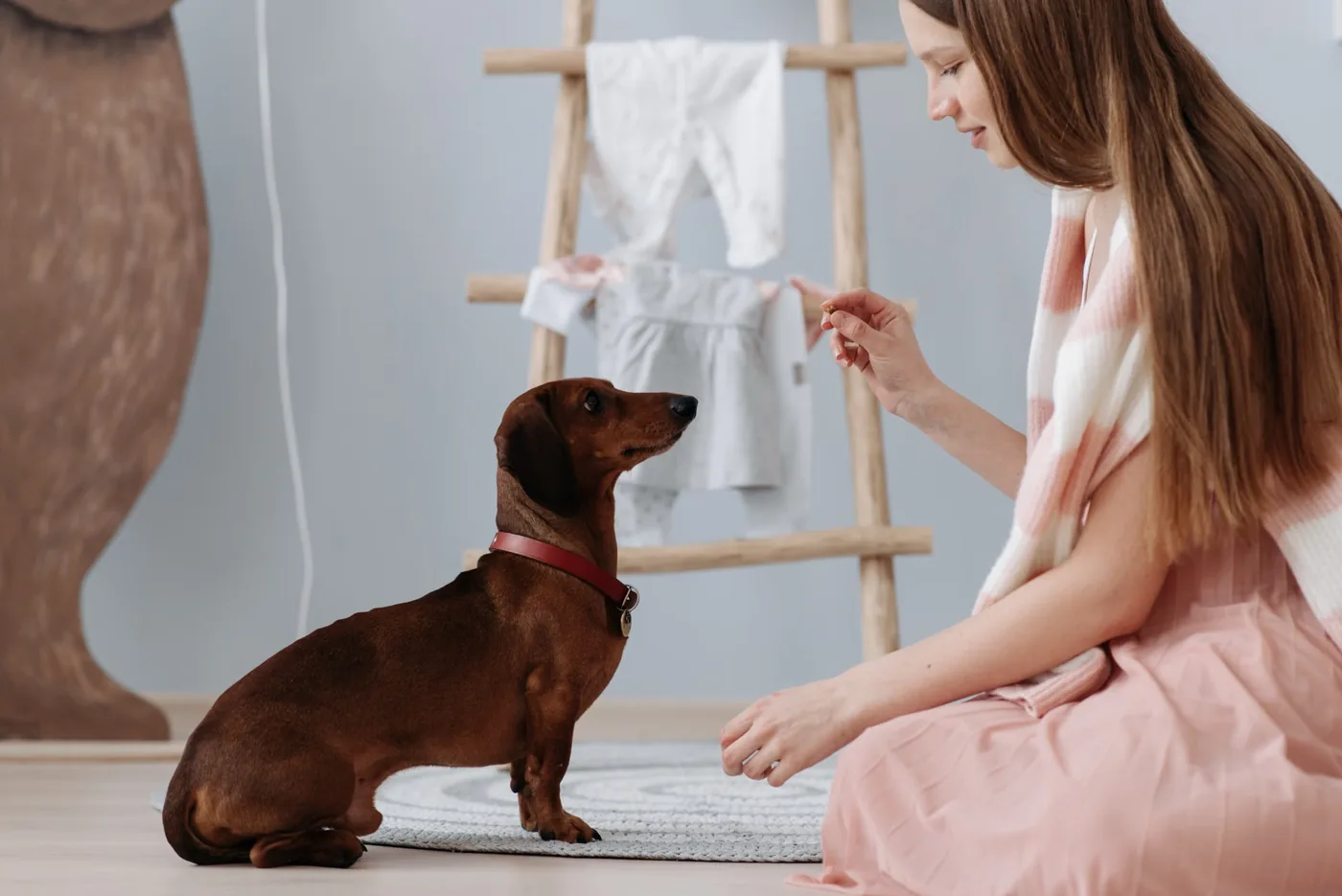
A worked example: the evening delivery rush
Imagine your log shows that barking clusters around evening deliveries while the dog lies beside the entry. There is no need to begin by reproducing the rush. First, prepare a resting option farther inside and practice the moving-away cue when the hallway is quiet.
Before the usual busy period, spend time in that area with your dog. A familiar, supervised activity may help if the dog enjoys it; it is not a cure for fear. When a mild noise occurs and the dog remains comfortable, offer a reward. When the episode is too intense, prioritize reducing exposure.
Review the outcome after a few comparable evenings. Did the dog remain farther from the door? Could they return to resting more easily? Did the new room cause frustration? Keep the helpful change, revise the difficult part, and avoid adding several new interventions at once.
This is an editorial example of problem-solving, not a promised treatment timeline. If the dog still cannot rest or begins reacting earlier, stop increasing the challenge and arrange qualified support. A quieter evening is useful evidence; it is not proof that every hallway event is now manageable.
Make the neighbor conversation practical
Ask when barking is heard and whether it follows a recognizable event. You might say, “I’m working on the door-noise routine. Knowing the approximate times would help me adjust it.” Keep the discussion factual and avoid promising a cure by a particular date.
Share only the information needed to coordinate. Ask household members to use the same cue and door procedure. Our entryway routine guide can help organize equipment without crowding the threshold. For shared rides, see elevator manners.
Check the plan when progress stalls
If every reward arrives only after a long episode, your dog gets little practice with the easier alternative. Add calm rehearsals when no hallway event is happening. Reward spontaneous check-ins and comfortable time away from the entrance so that those behaviors have a history before you need them.
Also check whether your cue has become background noise. If several household members repeatedly call the dog without following through, return to a simpler version in a quiet room. Use the cue once, make success easy, and agree on the response everyone will use. Avoid adding a new command each time the dog struggles.
Finally, ask whether the chosen reward and location suit this dog. A mat beside the noisy door may be the wrong place even if the dog understands the exercise. Food offered near another pet can create competition. Move practice to a comfortable setting and separate pets when needed. A useful adjustment makes learning easier; it does not demand more obedience during distress.
When hallway barking needs professional assessment
Contact your veterinarian for a sudden change, difficulty resting, pain signs, or reactions that seem disproportionate to ordinary sounds. Seek prompt support for escape attempts, aggression, injury, or prolonged panic. Keep people away from a distressed dog’s face and avoid cornering them.
The ASPCA’s behavior-help guide explains professional roles. Ask about relevant qualifications, reward-based methods, and experience with the actual problem. Bring the log and safe recordings. If barking mainly occurs during absence, explain that clearly rather than requesting only a “quiet” command.
Build a calmer doorway routine
Start with one useful observation and one manageable change. Give your dog distance from difficult sounds, teach the alternative somewhere easy, and coordinate how the household handles the door. Hallway barking becomes more workable when the plan supports recovery and safety, while leaving room for professional help when needed.
Sources & further reading
Sources and photo licenses checked October 13, 2026. AI-assisted editorial work by MyPupwise. Professional review remains pending; no veterinary review is claimed. The log and worked example are original planning aids, not diagnostic tests. Photographs are illustrative and do not show documented treatment cases or imply endorsement.
- ASPCA: Barking.
- AVSAB: Humane Dog Training position statements.
- Dogs Trust: Sound therapy resources.
- ASPCA: Behavioral Help for Your Pet.
Significant distress, sudden changes, and safety concerns require individual professional advice.
General guidance does not replace individual veterinary or behavior assessment.